Storm Damage Addressed Before It Compounds
Storm damage roof repair in Jacksonville for wind damage, hail impact, exposed decking, and roofs requiring emergency weather protection after severe weather.
Jacksonville's position along the North Carolina coast places it directly in the path of Atlantic storm systems that generate sustained winds capable of lifting shingle arrays, driving rain under flashing, and scattering debris across roof surfaces in a single weather event. Barnes Restoration Inc. provides storm damage roof repair services in Jacksonville, including wind damage restoration, hail damage assessment and repair, emergency tarping, and complete storm restoration for roofs requiring full system rebuilding after a major event. Property owners dealing with active exposure after a storm—missing shingles, displaced flashing, or visible structural damage—are the primary candidates for this service.
Hail damage is one of the more difficult storm impacts to assess without a physical inspection because significant damage often occurs to granule layers and shingle mat structure rather than producing visible holes or breaks. A hail event that leaves dents in aluminum gutters and flashing almost always leaves corresponding impact marks on shingles—granule displacement at the impact site exposes the asphalt beneath and accelerates UV degradation from that point forward. Wind damage follows a different pattern: shingles lift from the leading edge and either tear free or reseal in a lifted position, both of which compromise the waterproof layering the shingle system depends on during subsequent rain events.
Contact Barnes Restoration Inc. to arrange a storm damage assessment and determine what immediate and long-term repair work your roof requires.
Why Unaddressed Storm Damage Grows Over Time
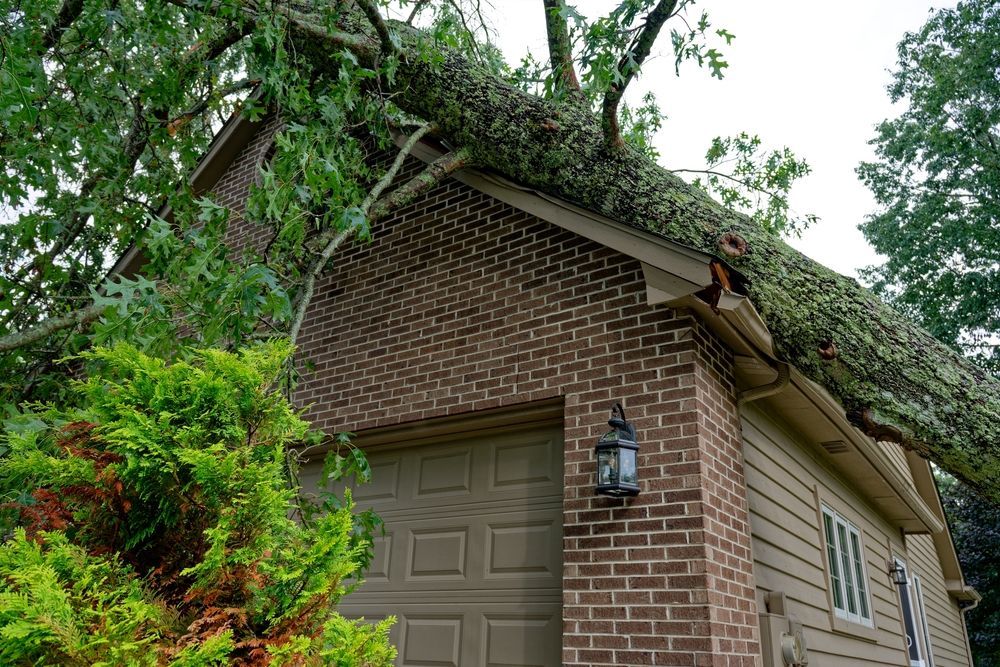
Storm damage that goes unrepaired doesn't stabilize—it expands with each subsequent weather event. A section of missing shingles exposes underlayment that was not designed to serve as the primary weather barrier; after several rain events, that underlayment saturates and eventually allows moisture to reach the decking beneath. Emergency tarping services provide immediate weather protection by covering exposed roof areas with secured tarping systems that divert water away from the breach until permanent repairs can be completed safely.
After storm restoration work is finished, the roof surface is free of lifted, cracked, or missing shingles that allow progressive water entry, and all flashing at vulnerable transition points is reseated or replaced to prevent the leak paths that open when storm winds separate those joints. Complete storm restoration—full tear-off and rebuild—is appropriate when a storm causes damage extensive enough that repairs would address only part of a system already broadly compromised.
Roof damage assessments document the scope and nature of storm damage, which is relevant for property insurance claims. Barnes Restoration Inc. provides thorough assessments that identify all affected areas of the roof system, giving homeowners an accurate picture of what the storm did to the structure before repair decisions are made.
What Property Owners Ask After Storm Damage
These answers address the specific concerns Jacksonville homeowners raise after a significant storm event affects their roof.
How quickly should emergency tarping be applied after storm damage?
Tarping should cover exposed roof sections as soon as conditions allow safe access—each rain event that reaches exposed decking expands the scope of moisture damage and increases the extent of repair work required to restore the system.
What does hail damage look like on asphalt shingles?
Hail impact creates soft spots or bruising in the shingle mat that may not be visible from the ground; up close, impacted areas show granule displacement and a slightly depressed texture at the impact site where the mat structure is compromised.
Does Barnes Restoration Inc. assist with documentation for insurance claims after storm damage?
Damage assessments include documentation of affected areas, impact patterns, and structural findings that support the insurance claim process—homeowners submit claims directly with their carrier, but thorough assessment records are part of the service provided.
How is wind damage different from normal shingle wear?
Wind damage creates distinct lift patterns starting at the exposed shingle edge and progressing toward the nail line; normal wear produces uniform granule loss and surface cracking across the shingle face rather than mechanical separation at the bond points.
Why does storm damage sometimes require full roof replacement rather than section repair?
When a storm affects the majority of a roof surface, or when the existing system was already near the end of its serviceable life, replacing individual sections leaves aging materials in place—full replacement addresses the complete system and reduces the likelihood of repeated repair needs over a short period.
Barnes Restoration Inc. responds to storm damage roof repair needs across Jacksonville, from emergency tarping and targeted shingle repairs to complete storm restoration. Arrange a damage assessment to document what your roof sustained and identify the appropriate repair path before further weather exposure occurs.